


What is Sustainable ESG? 8 Steps to Implement ESG in Enterprises
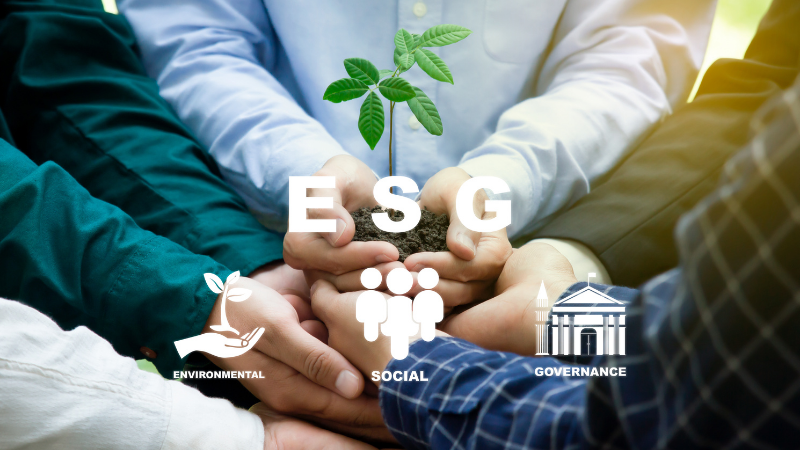
Amid increasingly stringent global standards, ESG has become a new benchmark for evaluating a company’s sustainability performance. ESG stands for Environmental – Social – Governance, referring to how a business operates without causing harm to the environment, communities, or the market.
Previously considered an “optional add-on”, ESG is now required by many major corporations across Europe and Asia as part of their supply chain standards. Not only listed companies, but also SMEs are adopting ESG to meet the expectations of international investors and customers.
Three Pillars of ESG
- Environment: Emissions control, waste management, energy efficiency, sustainable resource use.
- Social: Occupational safety, employee rights, equality, community contributions, consumer transparency.
- Governance: Governance structure, anti-corruption, financial transparency, legal compliance.
Experts note that companies with strong ESG practices often gain competitive advantages in capital access, brand reputation, and market expansion.
ESG as a Tool for Risk Resilience
ESG encompasses environmental, social, and governance risks across operational processes. It helps businesses identify and mitigate vulnerabilities that may impact long-term performance.
Four major risk categories when ESG is not implemented include:
- Legal risks: license restrictions or revocations.
- Market risks: losing customers due to not meeting sustainability requirements.
- Financial risks: limited access to capital, higher credit costs.
- Human resources risks: reduced ability to attract and retain talent.
8 Steps to Implement ESG in Enterprises
Implementing ESG is not just about reporting — it is a strategic management transformation. According to sustainability advisory organizations, businesses can follow eight foundational steps:
Step 1: Build Internal Commitment
ESG works only when leadership and employees share a unified understanding. Executives need to recognize the benefits (risk reduction, competitiveness, lower capital costs), while internal communication ensures ESG is seen as a long-term strategy rather than a trend.
Step 2: Choose the Right ESG Framework
Each industry uses different standards — for example financial institutions use SASB, manufacturers may use GRI or GHG Protocol for emissions accounting. Selecting the right framework ensures correct metrics and reporting boundaries.
Step 3: ESG Baseline Assessment
Data is collected from relevant departments (environment, safety, HR, finance, operations) and compared against selected standards. Results highlight strengths, gaps, and legal compliance status.
Step 4: Materiality Assessment
Not all ESG criteria are equally relevant. A garment company prioritizes labor & supply chain, while an energy company focuses on emissions & biodiversity. A “materiality matrix” helps determine priorities based on two factors: business impact and stakeholder concerns.
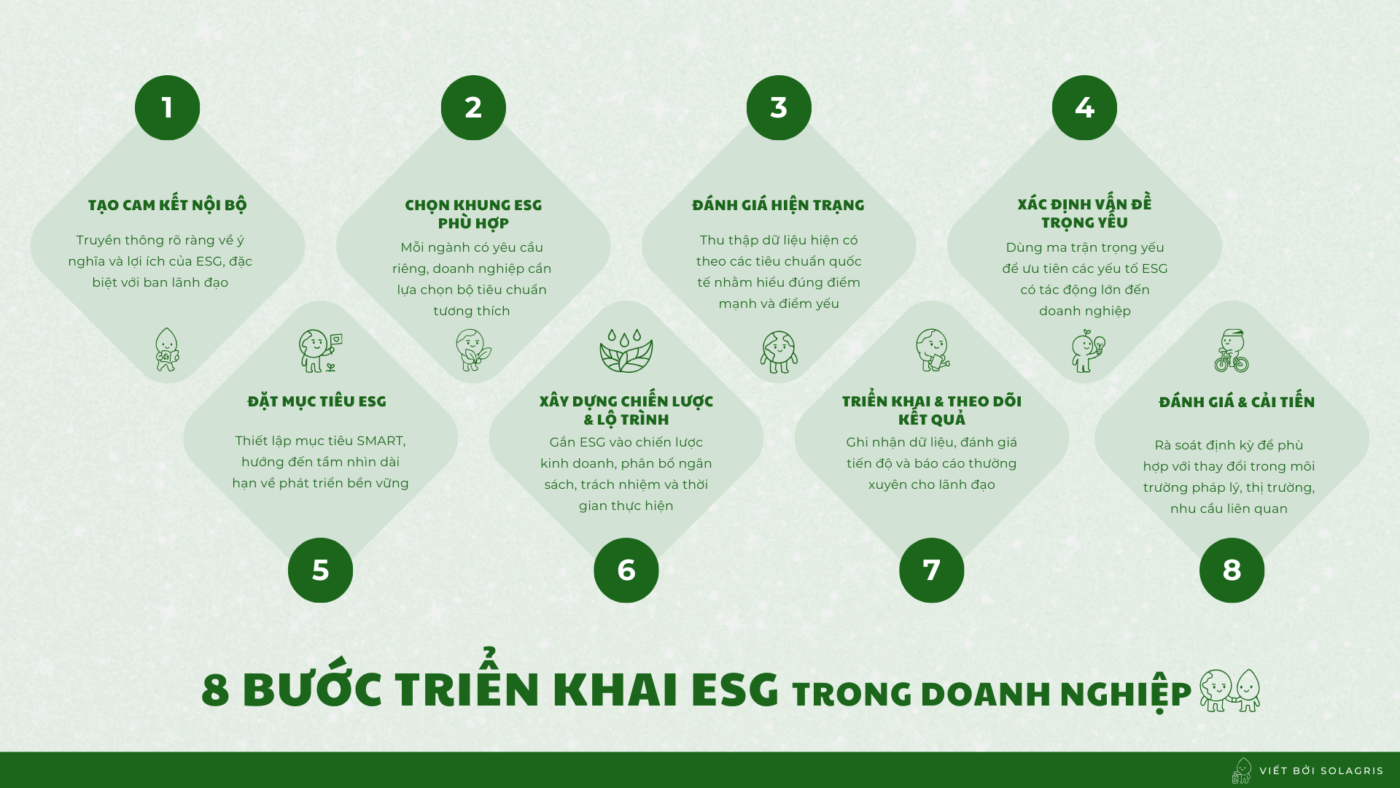
Step 5: Set ESG Targets
Targets should follow SMART principles. Clear goals make reporting, capital raising, and monitoring easier. Examples include:
-
Reduce CO₂ emissions by 15% by 2030
-
Raise female leadership ratio to 35% by 2028
-
Ensure 100% suppliers comply with environmental standards by 2035
Step 6: Strategy & Roadmap Development
This step answers “how to achieve the targets?” by breaking goals into initiatives, assigning departments, allocating budgets, and designing ESG project portfolios (such as renewable energy transition, water-efficient production lines, green packaging, safety improvements, digital governance).
Step 7: Implementation – Monitoring – Reporting
Enterprises execute action plans while recording performance data. Reports serve not only internal governance but also investors, banks, regulators, and international buyers. Many companies publish Sustainability Reports or include ESG in annual reports.
Step 8: Review & Continuous Improvement
ESG is ongoing, not one-off. Regulatory and market requirements change frequently (e.g., EU CBAM, carbon tax, international reporting standards). Regular reviews help companies update datasets, adjust frameworks, and improve governance.
ESG in Vietnam: From Commitment to Execution
Following Vietnam’s COP26 Net-Zero commitments, supporting policies are being developed. Leading enterprises have begun integrating ESG to secure global supply chain positions and prepare for new “green trade barriers”.
Experts emphasize that Vietnamese businesses should adopt ESG early to optimize resources and avoid passive adaptation when new market requirements arise.
Compiled by SOLAGRIS

